Real Time Monitoring
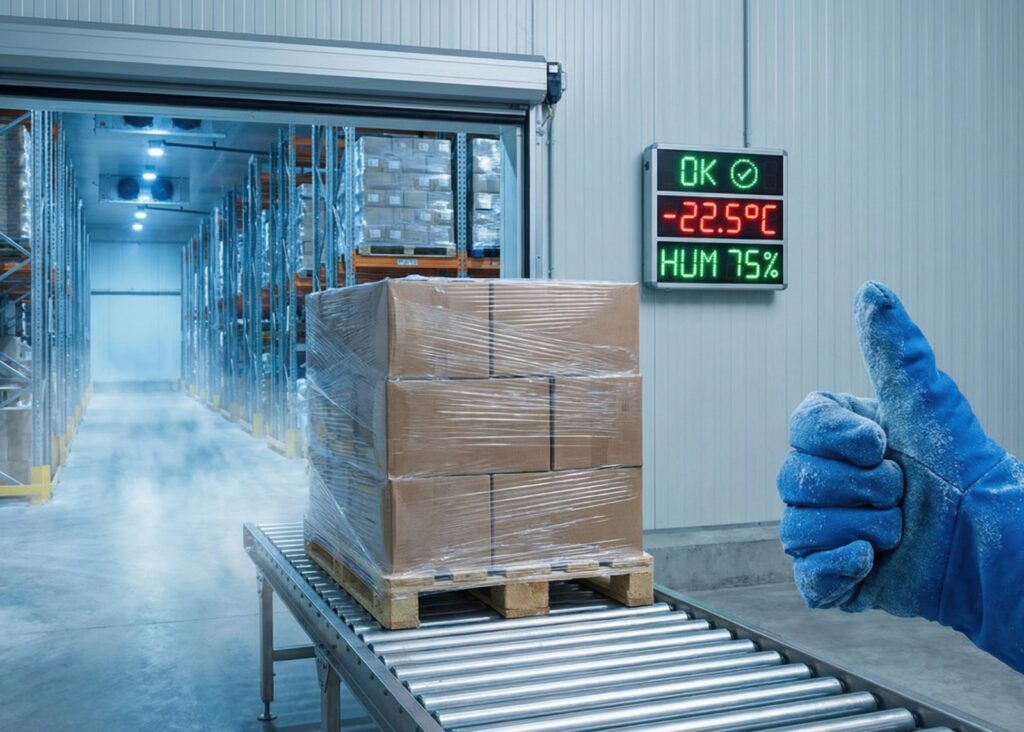
Beyond Ships and Trucks: The Silent Guards of Static Cold Chain Monitoring
When people picture cold chain logistics, they usually imagine big diesel rigs rumbling down the highway or massive container ships slicing through the ocean. It is easy to think of temperature control as something that only matters when goods are in motion.
However, some of the highest-risk moments for perishable inventory happen when cargo is standing completely still.
Welcome to the world of static cold chain monitoring, the unsung hero of food safety, pharmaceutical compliance, and inventory protection.
What is Static Cold Chain Monitoring?
While in-transit monitoring tracks goods on the move, static monitoring safeguards inventory at rest. It focuses on fixed infrastructure:
- Cold Storage Warehouses: Massive industrial hubs holding millions of Rands in inventory.
- Processing & Packing Floors: High-traffic zones where raw goods are prepared.
- Ripening & Holding Rooms: Precision-controlled spaces for agricultural exports.
- Franchise Walk-In Freezers: Kitchen storage hubs holding pre-prepared stock.
In static environments, inventory stays in one location for days, weeks, or even months. If a cooling unit in a transport truck fails, you might lose a single load; if a main warehouse cooling system fails overnight, you could lose an entire quarter’s balance sheet.
Enter the Cold Sensor: The Digital Eyes on the Wall
At the heart of static monitoring sits the cold sensor. Gone are the days of manual wall thermometers and paper logs filled out with a pen by a worker holding a clipboard.
Modern cold sensors are compact, battery-powered IoT (Internet of Things) devices mounted directly inside cold storage environments. Here is how they turn static rooms into intelligent spaces:
1. Continuous, Unbroken Data Streams
Instead of checking the temperature twice a day, digital sensors log environmental conditions continuously—every few minutes, 24/7. They create an unbroken digital record that proves compliance to health inspectors, export authorities, and quality assurance teams.
2. Thermal Micro-Climate Detection
Air does not move uniformly inside a large room. Warm spots frequently form near high-traffic access doors, poorly ventilated corners, or close to overloaded cooling coils. Multi-point cold sensors identify these hidden micro-climates before perishable stock placed in those zones begins to spoil.
3. Instant, Automated Alerts
A cold sensor does not wait for someone to walk by to report a problem. The second a holding room, walk-in freezer, or prep area drifts past its safe temperature setpoint, the sensor sends automated real-time alerts via email or notification straight to facility managers.
The Hidden Threats to Static Storage
Why do fixed facilities need independent monitoring if they already have built-in refrigeration controls? Because static storage faces unique operational hazards:
The Power Switch Hazard: When power grid fluctuations occur, or generators kick in, primary cooling systems can trip, reset, or restart in default modes without raising an obvious alarm. Independent, battery-powered cold sensors operate completely outside the main electrical grid, keeping watch even when the mains fail.
The Human Element: High-volume distribution hubs see continuous foot traffic. Doors are left unlatched during hectic shifts, loading bays remain open too long during pallet staging, and stock gets piled up too close to air vents, blocking circulation.
Silent Mechanical Degradation: Slow refrigerant leaks or iced-over evaporator coils do not cause sudden temperature spikes. They cause gradual, insidious heating over several hours, often overnight, that manual checks completely miss until it is too late.
Partnering with Cold Watch: Turn Static Risks into Complete Certainty
Managing static cold storage shouldn’t mean staying up at night worrying about silent equipment failures or unlatched walk-in doors.
When you partner with Cold Watch, you gain more than just hardware you secure a complete, end-to-end monitoring ecosystem tailored to your unique facility layout. From high-precision, SANAS-approved sensor setups to automated alert configurations and digital audit reporting, Cold Watch gives your quality and operations teams 24/7 visibility over your static inventory.
By taking the guesswork out of facility management, Cold Watch helps you protect your margins, ensure total compliance, and guarantee that your perishables stay in peak condition from the facility floor to the final customer.
The Bottom Line
Static cold chain monitoring transforms facility management from a game of reactive damage control into a proactive strategy of risk prevention.
By placing reliable, high-precision cold sensors in every staging room, walk-in fridge, and warehouse, and partnering with Cold Watch to manage the intelligence behind them. Businesses can safeguard their assets with total confidence.