Cold Watch

Real Time Monitoring

  • Home
  • About Us
  • Products
  • Services
  • Gallery
  • Media
    • Blog
    • Newsletter
    • Videos
  • Legal
    • Delivery Policy
    • FAQs
    • Privacy Policy
    • Refund & Returns Policy
    • Terms & Conditions
  • Contact Us

Why a Smart Monitor Cannot Fix a Failing Fridge

26/06/2026 By Madelize Botha

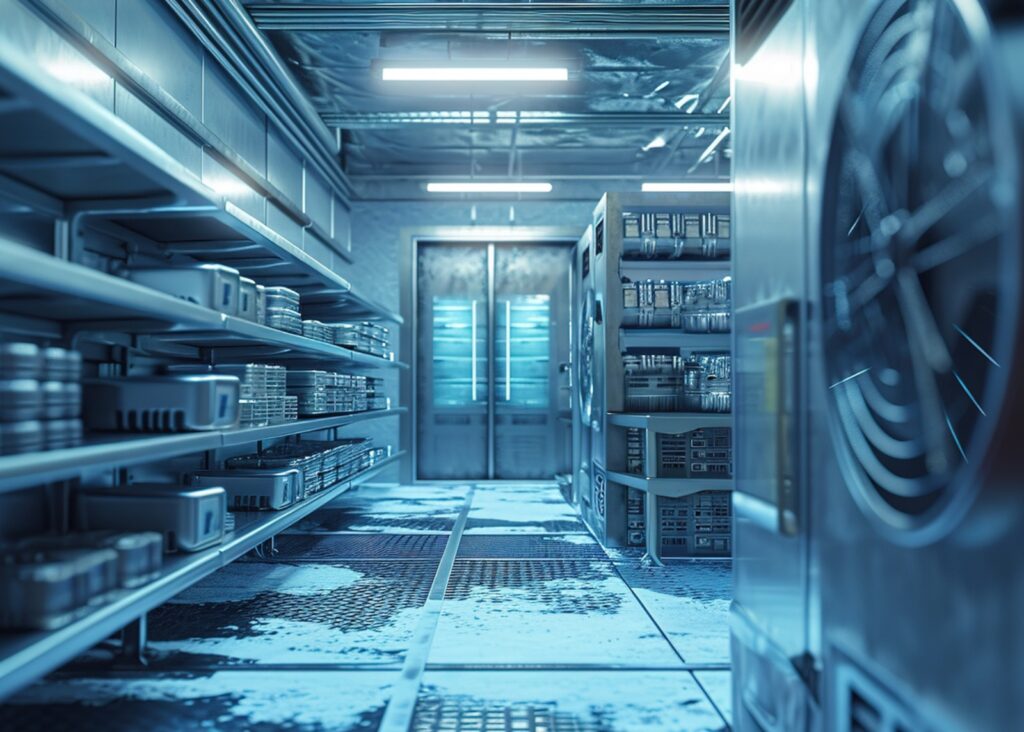
Smart Monitor Cannot Fix a Failing Fridge

Why Real Time Monitoring is No Longer Optional in Modern Cold Chains

Imagine investing in a world-class, multi-layered security system. You have the motion sensors calibrated perfectly, the smart cameras streaming in high definition, and an automated panic system wired directly to a rapid-response team.
Now, imagine leaving the front door hanging completely off its hinges.
The security system will do its job flawlessly. It will log the breach, trigger the sirens, and alert your phone with urgent notifications. However, the system cannot physically march over and close the door for you.
In the world of temperature-sensitive logistics, Cold Watch is your ultimate security system, but your refrigeration infrastructure is the front door.

The Symphony of the Cold Chain

Continuous, real-time IoT temperature monitoring is a game-changer. It replaces unreliable manual logs with bulletproof digital data streams, giving you 24/7 visibility over your assets, whether you are protecting lifesaving veterinary vaccines or premium, grain-fed poultry.
However, a data logger is a diagnostic tool, not a mechanic.
Our monitoring equipment is designed to detect the earliest whispers of a temperature excursion. For that data to mean anything, it relies entirely on a foundational truth: Your facility’s primary cooling infrastructure must be in perfect working order.
When infrastructure is neglected, the cold chain transitions from a controlled environment into a high-stakes rescue mission.

The Hidden Cost of “Reactive” Maintenance

It is incredibly easy to treat refrigeration as a “set and forget” asset. If the air feels cold when you walk into the unit, everything must be fine, correct? Not necessarily.
Refrigeration units operate under relentless thermal and mechanical stress 365 days a year. When preventive maintenance falls by the wayside, small mechanical degradations begin to snowball behind the scenes.
Industry data shows that nearly 35% of unplanned cold storage downtime is triggered by preventable refrigeration system failures.
When you wait for a total mechanical breakdown to call a technician, you are not just paying for a repair. You are paying emergency contractor premiums, risking massive product spoilage, scrambling your logistics schedule, and staring down a mountain of regulatory compliance paperwork.

Three Infrastructure Traps Your Monitor Will Catch (But Cannot Fix)

When our Cold Watch dashboards begin showing erratic temperature spikes or a slow, upward drift, the culprit is almost always one of three classic maintenance oversights:

1. The Invisible Energy Thief: Fouled Condenser Coils

Air-cooled condensers collect dust, grease, and airborne debris over time. When coils are caked in grime, the system cannot dissipate heat efficiently. Head pressure spikes, energy consumption jumps by up to 40%, and your compressor has to work twice as hard to maintain target temperatures, rapidly accelerating its path to a costly burnout.

2. The Slow Leak: Compromised Door Gaskets

A brittle, torn, or poorly aligned door seal might seem minor, but it allows warm, moisture-heavy ambient air to constantly seep into your cold space. This causes immediate frost and ice buildup on your evaporator coils, choking off essential airflow and forcing temperature inconsistencies across the room.

3. The Gradual Fade: Low Refrigerant Charge

A slow, unnoticed refrigerant leak is the number one cause of gradual temperature control loss. The system does not die instantly; instead, it runs continuously without ever quite hitting its optimal setpoint, leaving your inventory sitting precariously on the edge of a safety excursion.

Your Proactive Checklist

To ensure your Cold Watch system functions as an early warning shield rather than a constant crisis alarm, we highly recommend implementing a rigid Planned Preventive Maintenance (PPM) schedule with your refrigeration partners:

  • Monthly: Visually inspect all door gaskets for gaps or tearing. Check evaporator fans to ensure unobstructed airflow.
  • Quarterly: Schedule a professional cleaning of all condenser and evaporator coils. Flush out drain lines to prevent ice blockages and microbial growth.
  • Annually: Secure full system calibrations, refrigerant leak testing, electrical panel thermal scans, and compressor oil analysis.


Protecting Your Integrity, Together

Our mission at Cold Watch is to give you absolute, undeniable certainty over your cold chain environment. We provide the real-time visibility, the instant alerts, and the historical data reporting required to prove compliance and protect your bottom line.
True operational excellence is a partnership between cutting-edge monitoring and robust mechanical maintenance.
Do not wait for your Cold Watch dashboard to flash red to find out your fridge is struggling. Book a routine service with your refrigeration technician this week. Keep your equipment running smoothly, and let us handle the watch.

Filed Under: Cold Chain Monitoring

Why Real Time Monitoring is No Longer Optional in Modern Cold Chains

26/05/2026 By Madelize Botha

Real Time Monitoring

Why Real Time Monitoring is No Longer Optional in Modern Cold Chains

Across industries where quality and compliance are critical, the margin for error continues to shrink.
Whether you are managing food products, pharmaceuticals, agricultural goods, or temperature sensitive materials, one thing is clear. You cannot afford to get it wrong.

Yet many businesses still rely on outdated monitoring systems that were designed for a very different operating environment.
The reality is simple.

Technology has evolved, and monitoring must evolve with it.

The Hidden Risk in Traditional Monitoring

For years, monitoring systems have been built around data logging. This means recording temperature readings at set intervals, often every 30 to 60 minutes.
On the surface, this may seem sufficient.

But what happens in between those readings?
A temperature spike can occur minutes after a log is recorded. Equipment can fail. Doors can be left open. External conditions can shift.
And for up to an hour, no one knows.

By the time the next reading is captured, the damage may already be done. Products may be compromised. Compliance may be at risk. Financial losses may already have occurred.

Delayed data does not only create inefficiency. It creates risk.

Real Time Monitoring from Reactive to Proactive

This is where real time monitoring changes everything.
Instead of waiting for the next scheduled reading, real time systems continuously track environmental conditions and trigger instant alerts when something goes wrong.

This shift from delayed awareness to immediate action is critical.

    It means:

  • Issues are identified the moment they occur
  • Teams can respond before damage escalates
  • Product integrity is protected
  • Compliance is maintained with confidence


In modern cold chains, every minute matters.
Systems that only provide hourly updates are no longer sufficient.

Connectivity Matters GSM vs Wi-Fi

Even the most advanced monitoring system is only as reliable as its connection.
Choosing between Wi-Fi and GSM is not just a technical decision. It is an operational one.

Wi-Fi works well in controlled environments. It is fast, cost effective, and integrates easily into existing infrastructure. However, it depends entirely on local networks. When those networks fail, visibility is lost.
GSM operates independently using cellular networks. This makes it ideal for transport, remote sites, and distributed operations where reliability cannot be compromised.

The key takeaway is clear.
There is no universal solution. There is only the right solution for your environment.

Hardware Decisions Bluetooth vs Wired

The same principle applies when selecting monitoring hardware.
Bluetooth systems offer flexibility and ease of installation, making them suitable for smaller or less complex environments. However, their limited range and susceptibility to interference can create gaps in coverage.

Wired systems provide stability and consistency. They are not affected by signal interference and are ideal for critical environments where reliability is essential. However, they require more structured installation.

The most effective systems do not rely on one approach alone. They combine technologies strategically.
Effective monitoring is not about convenience. It is about confidence.

The Shift to Intelligent Monitoring

Modern monitoring is no longer just about collecting data.

    It is about:

  • Integration across systems and locations
  • Real time visibility across the entire supply chain
  • Intelligent insights that support better decision making


As supply chains become more complex and compliance requirements more demanding, businesses need systems that do more than measure. They need systems that inform, alert, and protect.

Cold Watch More Than a Monitoring Provider

At Cold Watch, we understand that no two environments are the same.
That is why we do not offer one size fits all solutions.

We work alongside our clients as a strategic partner, designing monitoring systems that are tailored to specific operational needs. This includes selecting the right connectivity, integrating the right technologies, and ensuring full real time visibility across operations.
Our focus goes beyond providing products.

    We deliver:

  • Reliable real time monitoring solutions
  • World class service and support
  • Ongoing innovation to stay aligned with technological advancement

Looking Ahead

The future of cold chain monitoring is clear.

  • Real time, not delayed
  • Integrated, not isolated
  • Intelligent, not reactive


Businesses that embrace this shift gain greater control, reduce risk, and operate with confidence.
Those that do not will continue to face unnecessary exposure.

Final Thought

If you only know about a problem after it happens, it is already too late.
At Cold Watch, we are here to ensure that never happens.

We do not just monitor environments.
We help you protect what matters most.

Filed Under: Cold Chain Monitoring

12 Years of Monitoring What Matters: How Cold Watch Helped Transform Cold Chain Visibility

28/04/2026 By Madelize Botha

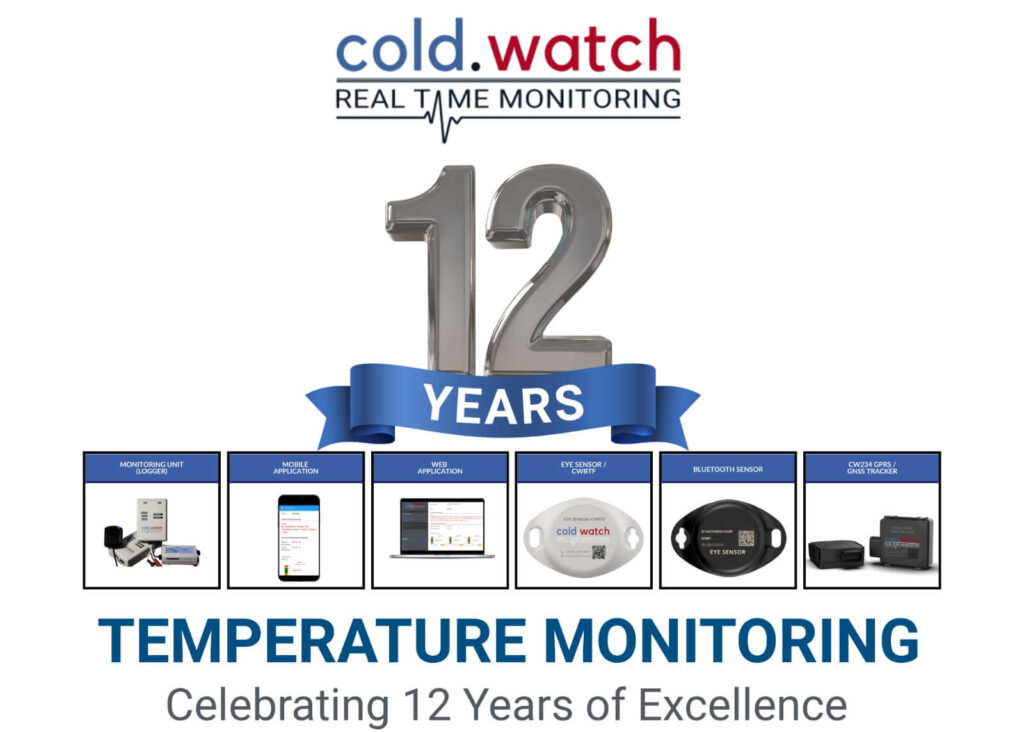
ColdWatch 12 Years Temperature Monitoring

12 Years of Monitoring What Matters: How Cold Watch Helped Transform Cold Chain Visibility

Twelve years ago, cold chain monitoring looked very different.

Temperature checks were manual. Data was recorded on paper. And when something went wrong, businesses often only discovered it after the damage had already been done.

Fast forward to today, and the landscape has completely transformed.

Cold chain monitoring is no longer about reacting to problems, it is about preventing them. And at Cold Watch, this evolution has been at the heart of everything we do.

From Manual Checks to Intelligent Monitoring

In the early days, maintaining product integrity relied heavily on routine checks and human intervention. While effective to a degree, this approach left room for error, delays, and costly losses.

The introduction of wireless sensor technology marked a turning point. Suddenly, temperature and humidity could be tracked continuously, without interruption.
But the real shift came with connectivity.

By integrating sensors into cloud-based platforms, Cold Watch enabled businesses to move beyond isolated data points and gain a complete, real-time view of their operations. Instead of looking back at what happened, businesses could now see what is happening right now.

Real-Time Data, Real-World Impact

Today, information is instant, and that changes everything.

With automated alerts, businesses no longer need to wait for reports or inspections to identify risks. If environmental conditions move outside acceptable ranges, notifications are triggered immediately, allowing teams to act before products are compromised.

Not only does this level of responsiveness reduce losses, it builds confidence.

From cold storage facilities to transport fleets, decision-makers have access to live data and remote monitoring, ensuring that every link in the supply chain is performing as it should.

A New Era of Supply Chain Control

The past decade has seen supply chains become more complex, more interconnected, and more demanding.

Customers expect quality. Regulators demand compliance. And businesses need to deliver, consistently.

Cold Watch systems support this shift by providing end-to-end visibility across storage, handling, and distribution. This means fewer blind spots, improved traceability, and greater accountability at every stage.

It is no longer enough to meet standards, businesses need to exceed them.

Supporting Industries Where Precision Matters Most

Over the past 12 years, Cold Watch has partnered with a wide range of industries where environmental control is critical.

From preserving the freshness of food products to ensuring the efficacy of pharmaceuticals, our solutions have been trusted to protect what matters most.

Agriculture, logistics, laboratories, and even data environments rely on precise monitoring to maintain quality, safety, and performance.

While each industry faces unique challenges, the need for accurate, reliable data remains constant.

More Than Monitoring – A Partnership

Technology is only part of the equation.

What truly defines Cold Watch is our commitment to understanding the environments we monitor and the businesses we support. Every solution is designed with real-world application in mind, practical, reliable, and tailored to specific operational needs.

Over the years, we have learned that monitoring more than collecting data. It is about providing insight, assurance, and control.

Looking Ahead

As technology continues to evolve, so too will the demands placed on cold chain systems.

Greater automation, deeper data insights, and increased integration will shape the future of monitoring. But one thing will remain unchanged, the need to protect product integrity at every stage.

After 12 years, Cold Watch remains focused on one goal:
Helping businesses monitor what matters, more accurately, more efficiently, and more intelligently than ever before.

Filed Under: Cold Chain Monitoring

Secure the Stamp. Protect the Shipment. Partner with Cold Watch.

25/03/2026 By Madelize Botha

Secure the Stamp. Protect the Shipment. Partner with Cold Watch

Secure the Stamp. Protect the Shipment. Partner with Cold Watch.

Why PPECB Registration Matters: The Benefits of Partnering with Cold Watch for Cold Chain Monitoring

Maintaining the integrity of temperature-sensitive products is non-negotiable. Whether you are handling fresh produce, seafood, flowers, pharmaceuticals, or other perishable goods, a robust cold chain is not just a quality concern: it is a business imperative.

That is where Cold Watch steps in. We are a trusted partner helping businesses monitor, manage, and protect their cold chain operations in real time. What sets Cold Watch apart is not only its advanced technology and tailored solutions, but also its alignment with recognised industry standards through registration with the Perishable Products Export Control Board (PPECB).

What Is the PPECB and Why It Matters

The PPECB is South Africa’s official perishable products export authority, with a legacy stretching back to 1926. It is an independent service provider mandated by the Perishable Products Export Control Act to deliver inspection, certification, and cold chain management services for perishable goods intended for export.

The PPECB’s role includes:

  • Technical Certification: Certifying that cold chain facilities and transport meet required technical and temperature standards.
  • Optimum Conditions: Ensuring products are handled, stored, and transported in optimum conditions throughout the export cold chain.
  • Global Assurance: Providing assurance to importers and international markets that products meet quality, hygiene, and regulatory requirements.

Being recognised under European regulations further enhances PPECB’s global credibility. South African perishable products certified by PPECB are significantly less likely to face additional inspections at EU ports.

What PPECB Registration Brings to Cold Watch Clients

As a cold chain monitoring company registered with the PPECB, Cold Watch brings an added layer of trust, expertise, and industry alignment to its services. This registration signals to clients that Cold Watch operates in accordance with internationally recognised quality and cold chain integrity standards: a crucial differentiator in a zero-margin-for-error environment.

How this benefits your business:

Enhanced Quality Assurance and Compliance

    • Cold Watch’s solutions are designed to align with cold chain requirements similar to those enforced by PPECB. This means:
  • Real-time monitoring data that supports compliance with internal quality systems.
  • Audit-ready records that can complement statutory inspections.
  • Confidence that your temperature-controlled environments are monitored using standards comparable to global best practices.


2. Reduced Risk of Product Loss and Waste

Temperature excursions, even for short periods, are a leading cause of perishable product spoilage. Cold Watch systems provide:

  • Instant Alerts: Immediate notifications when conditions fall outside target thresholds.
  • Detailed Trend Data: Showing what happened, where, and how long a deviation lasted.
  • Proactive Visibility: Allowing teams to react before product quality is compromised.


3. Operational Efficiency and Peace of Mind

Manual checks are slow, inconsistent, and prone to human error. Cold Watch automates monitoring across storage facilities, transport fleets, and cold rooms by providing:

  • Centralised dashboards for both static and mobile environments.
  • Remote access to cold chain data from anywhere.
  • Integrated alerts via SMS, email, or app notifications.


4. Strengthened Customer Confidence

Whether you supply local retailers or global buyers, customers increasingly demand assurance that their goods were kept within required conditions. With Cold Watch, you can share verified temperature records with clients and build stronger trust with buyers who value transparency and accountability.

5. Strategic Data for Continuous Improvement
Cold Watch monitoring gives you data you can use to:

  • Analyse recurring cold chain risks.
  • Predict maintenance needs before equipment fails.
  • Optimise routes, storage zones, and cold chain logistics.


Final Thoughts: Choosing Cold Watch Is Choosing Reliability

In a cut-throat retail landscape, supply chains and cold chain failures have real costs: lost revenue, regulatory penalties, damaged reputations, and unhappy customers.
By partnering with Cold Watch, you gain industry-aligned monitoring, enhanced compliance, and a data-driven foundation for continuous improvement. When product integrity matters, every degree and every data point counts.

Protect your products. Strengthen your processes. Build customer trust with Cold Watch.

Filed Under: Cold Chain Monitoring

Preserving Perishables in Grocery and Retail for Valentine’s Day Boost

26/02/2026 By Madelize Botha

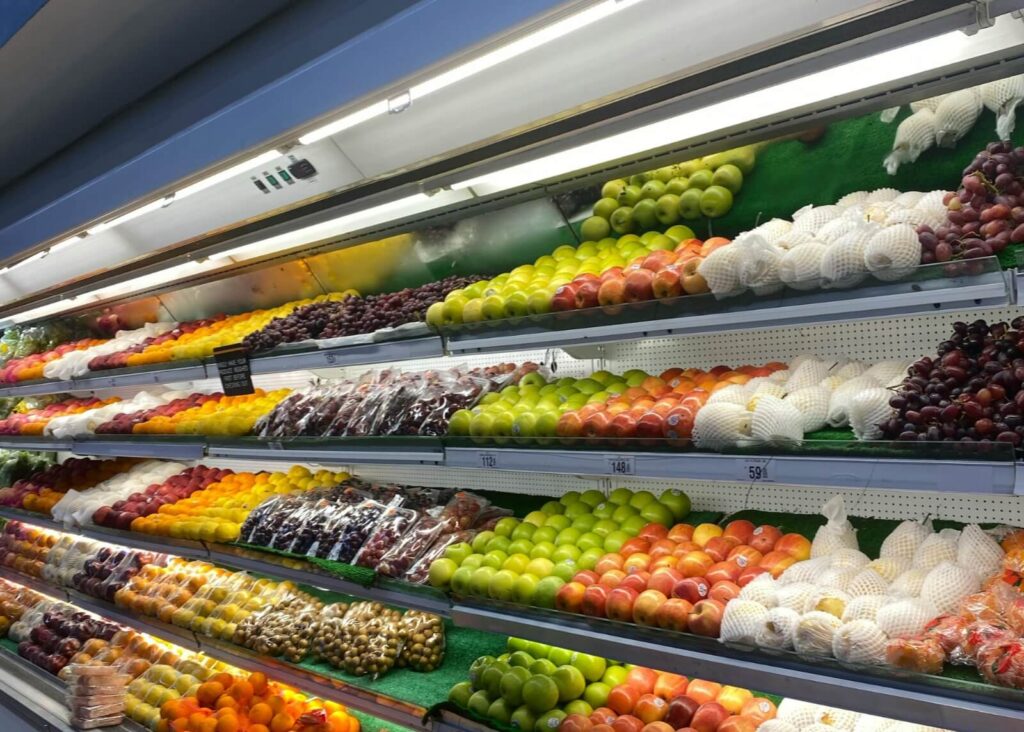
coldwatch grocery and retail

Preserving Perishables in Grocery and Retail for Valentine’s Day Boost

Valentine’s Day is a major revenue driver for fresh foods, ready meals, chilled desserts, seafood, meats, and specialty beverages. Grocery retailers experience a notable surge in perishable product sales in the lead-up to 14 February as consumers plan romantic dinners and indulgent at-home experiences.

For retailers, this seasonal spike means higher stock volumes, tighter turnaround times, and increased pressure on refrigeration systems, all while customers expect flawless quality.

That is where Cold Watch’s Temperature, Humidity, and CO₂ Monitoring Systems play a critical role.

The Perishable Risks Retailers Face During Valentine’s Season

    When cold chain conditions are not tightly controlled, retailers face:
  • Increased spoilage from temperature excursions
  • Shrinkage during peak inventory periods
  • Reduced shelf life of high-value products
  • Customer complaints and brand reputation damage
  • Regulatory and food safety compliance risks
  • Missed revenue due to product withdrawals


Even a few hours of unnoticed refrigeration failure can result in thousands of rands lost in stock, particularly for premium Valentine’s items.

How Cold Watch Supports Retail Environments

    Cold Watch provides real-time, automated monitoring across all retail cold chain touchpoints:
  • Fridge and freezer aisles
  • Back-of-house cold rooms
  • Distribution vehicles
  • Receiving bays and staging areas


With instant alerts and cloud-based dashboards, store managers and operations teams can detect and correct issues before product quality is compromised.

Key Benefits for Retailers

    Here’s how Cold Watch delivers tangible value during the Valentine’s period:
  1. Reduced Shrinkage & Waste
    • Early detection of refrigeration faults
    • Faster response to temperature deviations
    • Protection of high-value seasonal stock
      Result: Lower write-offs and improved gross margins.
  2. Increased Product Shelf Life
    • Stable temperature and humidity conditions
    • Reduced microbial growth and dehydration
    • Fresher products for longer
      Result: Fewer markdowns and higher sell-through rates.
  3. Improved Revenue Protection
    • Fewer stock losses during peak demand
    • More saleable inventory during high-turnover periods
      Result: Maximum revenue capture during Valentine’s promotions.
  4. Operational Efficiency
    • Automated logging replaces manual temperature checks
    • Centralised monitoring across multiple stores
    • Less staff time spent on compliance admin
      Result: Leaner operations and better use of store resources.
  5. Food Safety & Compliance Assurance
    • Audit-ready data for health inspections
    • Proof of cold chain integrity
    • HACCP and EN12830-aligned monitoring
      Result: Reduced regulatory risk and stronger compliance posture.
  6. Enhanced Brand Trust & Customer Satisfaction
    • Consistent product quality on shelves
    • Fewer spoilage-related complaints
    • Better customer experience during high-traffic periods
      Result: Stronger loyalty and repeat business.


Why Valentine’s Day Is the Time to Invest in Monitoring

Valentine’s Day is one of the most operationally demanding retail periods of Quarter 1 With increased perishable stock and higher customer expectations, it’s also the moment when cold chain failures are most costly.

    Cold Watch empowers retailers to:
  • Act proactively, not reactively
  • Maintain quality under pressure
  • Protect profit margins
  • Deliver consistently fresh products to customers


Retailers do not just sell products during Valentine’s season, they sell experiences, celebrations, and moments and At Cold Watch, we sell more than just products, we sell solutions

Partner with us and with our Temperature, Humidity, and CO₂ monitoring systems, you can ensure every chilled dessert, seafood platter, and premium ready meal meets the quality your customers expect.

Filed Under: Cold Chain Monitoring

  • 1
  • 2
  • 3
  • …
  • 9
  • Next Page »

CONTACT US: 24/7 CALL CENTRE

  • +27 (0) 72 291 2967
  • admin@coldwatch.co.za
  • info@coldwatch.co.za
  • Radicle Building, 5 Waterblommetjie Street, Wellington Industrial Park, Wellington, 7654, South Africa
cold watch sans
cold watch sans verified
  • Delivery Policy
  • Privacy Policy
  • Refund and Returns Policy
  • Terms and Conditions
  • Contact Us
  • Delivery Policy
  • Privacy Policy
  • Refund and Returns Policy
  • Terms and Conditions
  • Contact Us
Cold Watch Real Time Monitoring
Facebook Linkedin Instagram Blog
Copyright © 2026 Cold Watch | REAL TIME MONITORING · ALL RIGHTS RESERVED · PRIVACY POLICY